
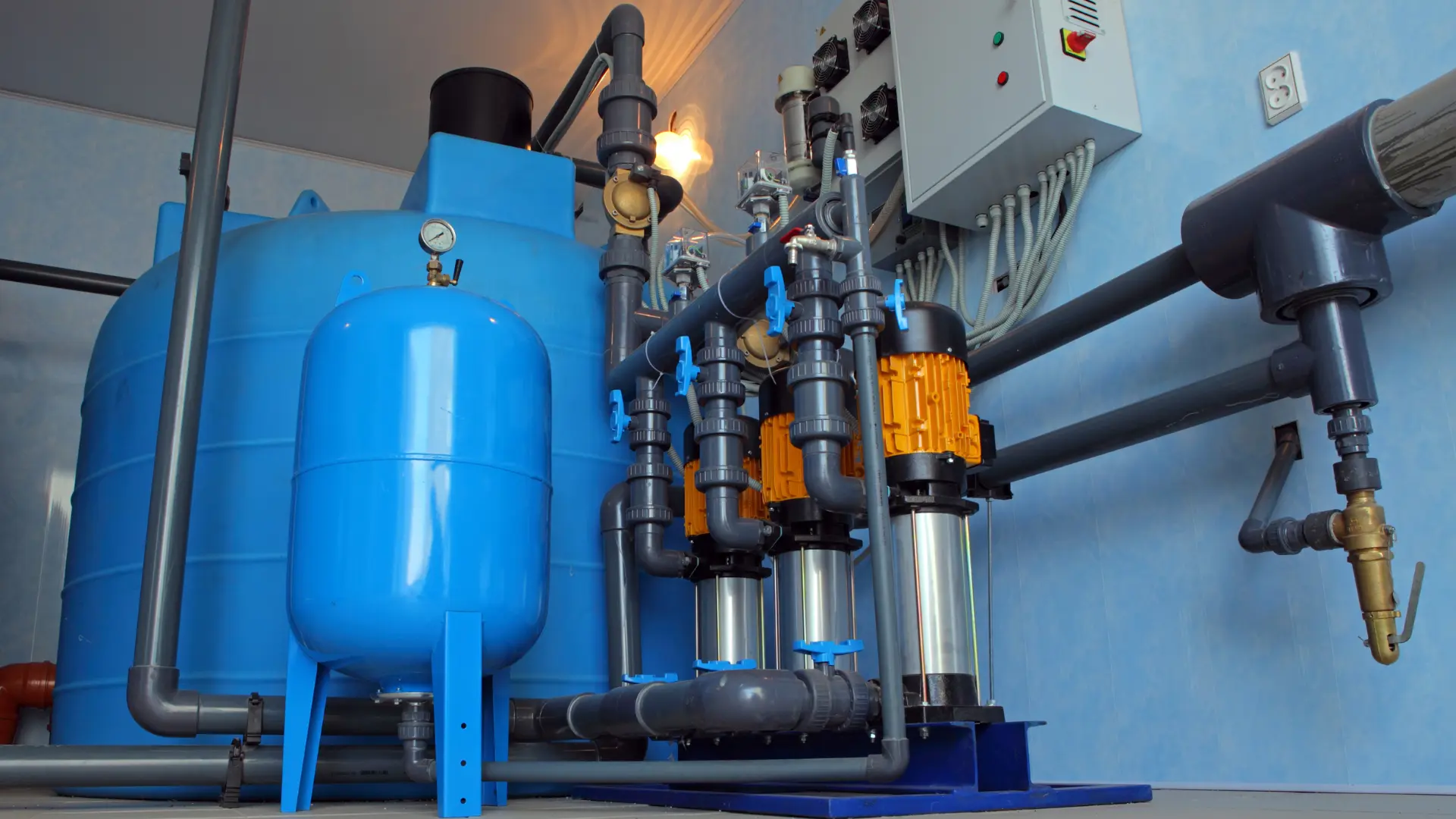
Choosing a commercial water filtration system can feel tricky because there’s a lot to consider. For example: water quality, staff and customer safety, and staying compliant without losing a lot of budget. Whether you’re running a café, hotel, factory, or office, the “right” system depends on what’s actually in your water, how much you use, and what you need it to do. You should completely understand what you want to achieve: improve taste, protect equipment from limescale, remove chemicals, or deal with bacteria? If you are still unsure, then this will come in handy. I’ll walk you through a practical way to choose a water filtration system. Here are the facts we will consider in this article:
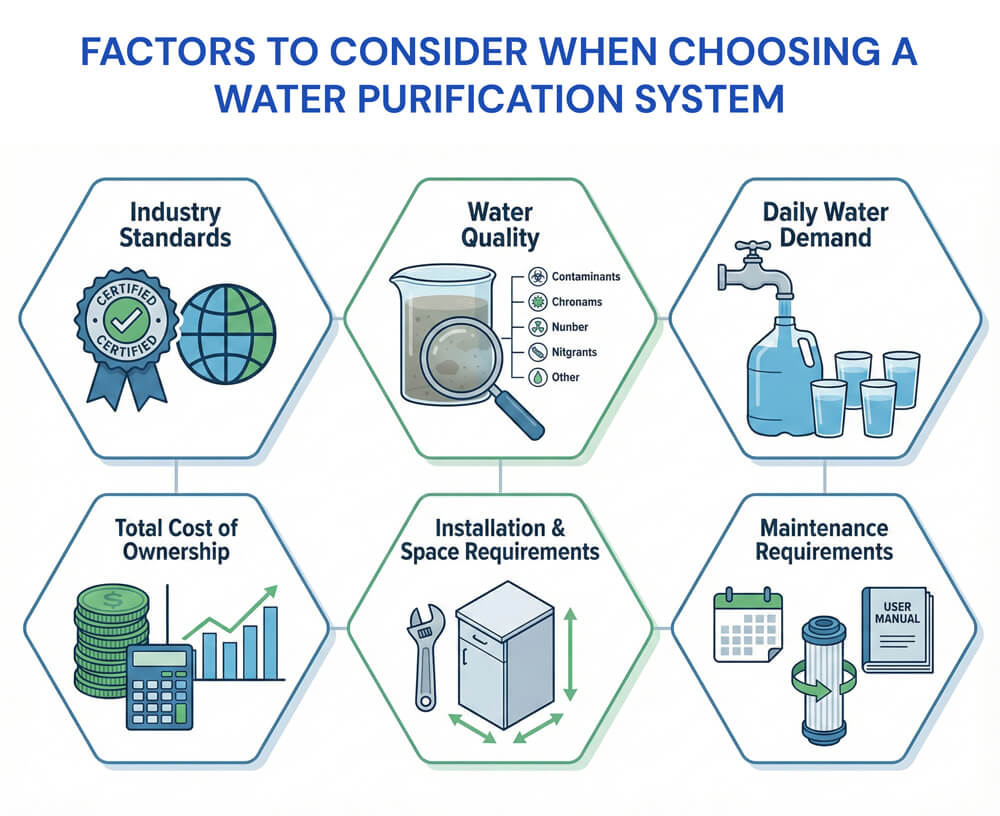
Factors to consider when choosing a water purification system
1. Water quality and contaminants
You can’t pick the right system without knowing what’s in your water. Get a proper water analysis done before you spend anything. This test will show you the specific contaminants you’re dealing with, which might include dissolved salts, bacteria, heavy metals, chlorine, sediment, or organic compounds.
Different problems need different solutions. If your water has high mineral content causing limescale, you’ll need a water softener or RO system. If bacteria and viruses are the issue, UV disinfection kills them without adding chemicals. For sediment and particles, you might only need commercial filtration. Please don’t assume you know what’s in your water based on location alone. So in any case, start with a water test first.
2. Your industry’s standards
Your industry likely has specific water quality regulations you must meet. Food and beverage operations need water that won’t contaminate products or affect taste. Healthcare facilities require sterile water for medical equipment and procedures. Manufacturing plants need mineral-free water to prevent scaling on machinery and ensure product quality. Pharmaceutical companies have the strictest requirements, often needing ultrapure water.
Check which standards apply to your business, whether that’s Food Standards Agency requirements, HSE guidelines, or industry-specific regulations. Make sure your chosen system meets them.
3. Daily water demand
To find out how much water you use, track your usage over a typical week. For restaurants, count how many covers you serve and estimate 10-15 litres per cover for cooking, dishwashing, and drinking water. Hotels need about 150-200 litres of water per room per day. Factories should check their water meters to get the right numbers.
Peak demand matters more than daily totals. If you use 500 litres spread evenly across 10 hours, that’s 50 litres per hour. But if you use that same 500 litres during a busy 2-hour period, you need a system that can deliver 250 litres per hour. When choosing a filtration system, check its flow rate (usually it is measured in litres per hour or litres per minute).
For smaller operations (under 100 litres daily), point-of-use systems are a good option. A single unit under the sink can produce 150-300 litres of water per day, which is enough for a small café or office. These cost between £500 and £2,000 and don’t take up much space.
Medium-sized businesses (100-1,000 litres daily) usually need commercial RO systems with storage tanks. A normal RO unit used in business can make 1,000 to 2,000 litres of water each day. You should expect to pay between £3,000 and £8,000. These need about 1-2 square metres of floor space, as well as space for the tank.
Big operations (more than 1,000 litres every day) need industrial systems. High-capacity RO plants can handle 5,000-50,000+ litres of water every day. CEDI systems are perfect for places that need very clean water all the time. The budget is between £10,000 and £100,000, depending on how much work they can do. These need special rooms for growing plants.
Storage tanks help to balance the difference between the amount of electricity produced and the amount that is needed at any one time. If your RO system produces 100 litres per hour but you need 300 litres in one hour, a 200-litre storage tank lets the system keep up. Make sure you have 1-2 days of storage capacity as a backup in case of maintenance or breakdowns.
To grow in the future, you should either buy 20-30% more capacity than you need now, or choose modular systems where you can add extra units later without having to replace everything.
4. Total cost of ownership
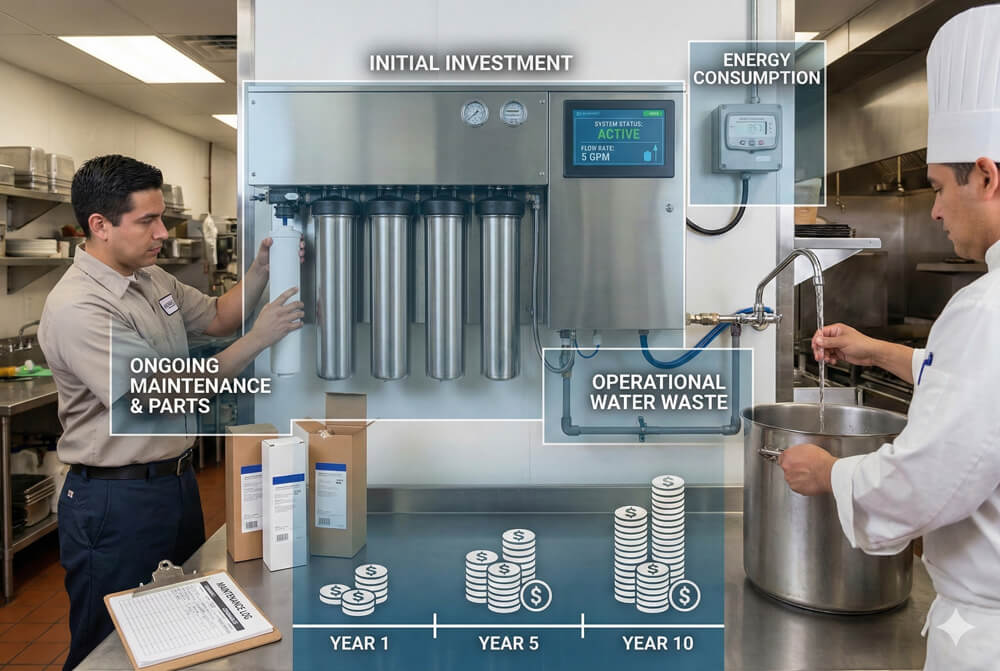
The purchase price is just the start. Calculate the full cost over five to ten years, including replacement filters, membrane changes, chemical costs, electricity usage, and maintenance callouts. Some cheaper systems end up costing more because they need frequent servicing or have expensive consumables.
Ask suppliers for realistic running costs. A system that costs £5,000 but needs £2,000 yearly in maintenance is more expensive than an £8,000 system with £500 annual costs.
5. Installation and space requirements
Measure your available space before you look at systems. Some units need significant floor space, whilst others can mount on walls. You’ll also need access to water supply, drainage, and usually electricity. Complex systems like RO or CEDI need proper drainage for waste water.
Installation costs vary widely. Simple point-of-use filters are straightforward, but whole-building systems might need plumbing modifications and professional installation. Get quotes that include installation, not just equipment costs.
6. Maintenance requirements
Every system needs maintenance, but some are more demanding than others. Basic sediment filters might just need quarterly cartridge changes you can do yourself. RO systems need membrane replacements every few years and regular sanitisation. UV systems need annual lamp replacements.
Think about whether you have staff who can handle routine maintenance or if you’ll need service contracts. Being without clean water because you missed maintenance isn’t an option for most businesses.
FAQs
How often do commercial water filtration systems need servicing?
It depends on the system type and your water quality. Most need filter changes every 3-12 months, RO membranes every 2-3 years, and UV lamps annually. High sediment in your water means more frequent changes. Set up a maintenance schedule based on your supplier’s recommendations and your water test results.
Do I need planning permission or building regulations approval?
Most water filtration installations don’t need planning permission, but you may need to notify your water supplier, especially for systems that discharge waste water. Larger commercial installations might need building control sign-off. Check with your local authority before installation.
Is a 5 micron or 20 micron water filter better?
It depends on what you’re filtering. A 5 micron filter catches smaller particles like fine sediment, rust, and some bacteria, making it better for drinking water or sensitive equipment. A 20 micron filter only stops larger particles like sand and debris, but it has higher flow rates and lasts longer before clogging.
For most commercial applications, use a 20 micron pre-filter first to catch large particles, then a 5 micron filter for finer filtration. This protects your main system and extends filter life. If you only need one, choose 5 micron for purity or 20 micron for high flow with basic sediment removal.
Which water filter removes the most toxins?
Reverse osmosis systems remove the widest range of contaminants – up to 99% of dissolved salts, heavy metals, fluoride, pesticides, and most chemicals. They filter at 0.0001 microns, which catches nearly everything except some dissolved gases.
However, “most toxins” isn’t always what you need. RO removes beneficial minerals too and wastes water. For specific toxins, targeted systems work better: activated carbon filters excel at removing chlorine and organic chemicals, UV systems kill all bacteria and viruses, and ion exchange removes specific heavy metals. Check your water test results and match the system to your actual contaminants rather than just choosing the most powerful option.
Ready to find the perfect water purification system for your business? Contact Wychwood Water today for a consultation or explore our full range of products here