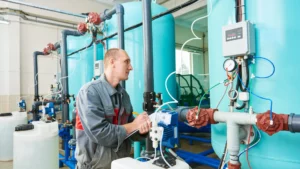

A carbon water filter is a filtration device that uses activated carbon to remove certain substances from water, primarily to improve taste, odour, and chemical content. In commercial applications, these filters are typically part of larger treatment systems where water quality must meet specific performance or safety standards. You’ll often find them in food and beverage production, hospitality, healthcare, and building-wide water treatment setups.
These filters are not designed to remove all types of contaminants, but they are effective for many common water quality issues. We install them as part of a multi-stage treatment process.
Below is an overview of what I’ll cover in this article:
Table of contents:
- How activated carbon removes contaminants
- What materials are used to make activated carbon
- How activated carbon is made and why surface area matters
- Types of carbon water filters
- What contaminants do carbon filters remove
- Where are carbon filters used in commercial water treatment?
- How often should you replace a carbon filter
How activated carbon removes contaminants
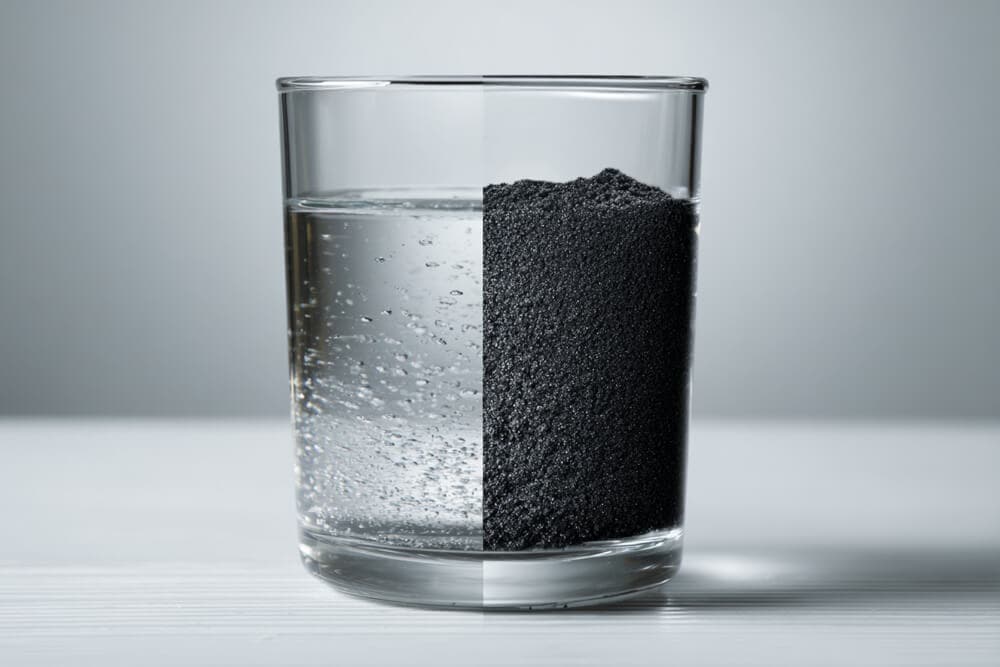
Activated carbon removes contaminants through a process called adsorption. This is often confused with absorption, but the two are not the same. In absorption, a substance is soaked up into another material — for example, water entering a sponge. Adsorption, on the other hand, refers to substances attaching themselves to the surface of a material.
In the case of activated carbon, the surface is full of microscopic pores. When water flows through the filter, certain molecules in the water bind to the carbon’s surface. This bond is not chemical; it’s physical. The more surface area the carbon has, the more contaminants it can hold.
From a practical perspective, you can think of the carbon acting like a surface with many parking spaces. Once all the spaces are taken, any additional contaminants in the water will pass through without being captured. This is why capacity and timely replacement matter.
Activated carbon is particularly good at adsorbing organic compounds and chemicals that affect taste and odour. These include chlorine, certain pesticides, and volatile organic compounds. However, it does not perform the same way for all substances, which I will explain in a later section.
What materials are used to make activated carbon?
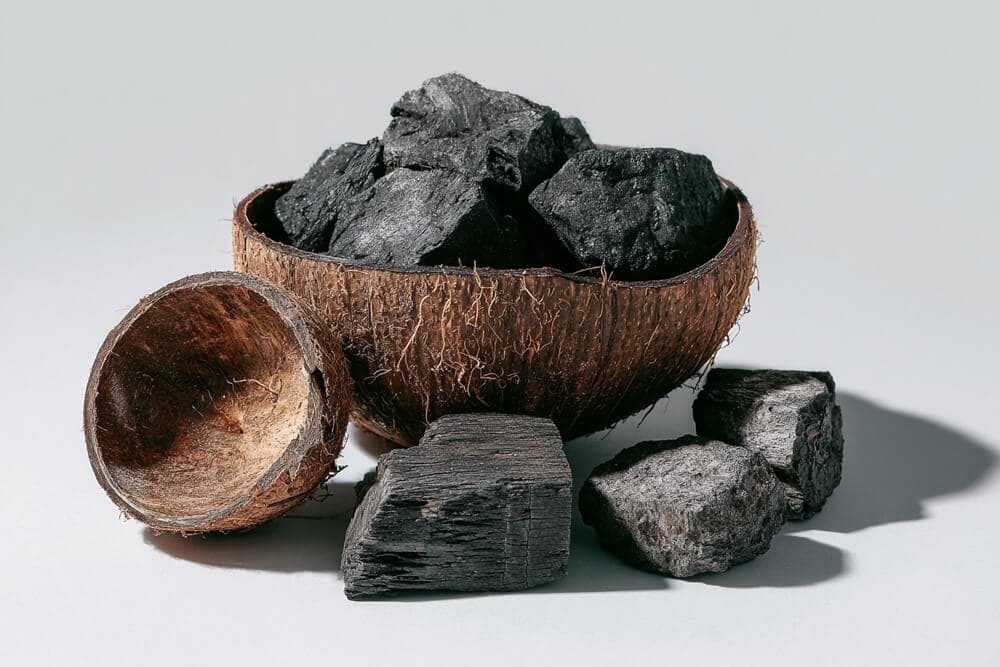
Activated carbon used in commercial water filters is made from carbon-rich natural materials. These materials are processed to create a porous structure suitable for adsorption. The three most common sources in water treatment are coconut shell, wood, and bituminous coal.
Coconut shell is currently the most widely used material in the industry. It offers several advantages:
- It is a renewable and sustainable resource.
- It produces a hard, dense carbon with a fine pore structure, which is well-suited for removing small organic molecules from water.
- It has low ash content, reducing interference with filtration.
Wood-based carbon is also used, though less frequently in water treatment. Its pore structure is generally larger, which makes it more effective for removing larger molecules. However, it is not as commonly selected for commercial filtration systems that target chlorine or VOCs.
Bituminous coal was used more widely in the past but is now less common. During its mining and processing, trace levels of arsenic have been found, raising concerns about water safety. For that reason, many manufacturers have shifted away from coal-based carbon, particularly in drinking water applications.
The choice of material affects:
- The pore size distribution.
- Hardness.
- Overall performance of the carbon.
In commercial systems, coconut shell carbon is often preferred for its consistency, availability, and ability to meet regulatory standards.
How activated carbon is made and why surface area matters
To make carbon effective for water filtration, the raw material undergoes a process called activation. This typically involves heating the carbon in the absence of oxygen, followed by exposure to steam or carbon dioxide at high temperatures. The activation process opens up microscopic pores within the carbon, dramatically increasing its internal surface area.
This surface area is critical because it determines how many contaminants the carbon can hold. To give you an idea of scale: one gram of activated carbon can have between 500 and 1,000 square feet of surface area. This means a relatively small amount of material can provide extensive adsorption capacity when properly processed.
The more finely the carbon is ground and compressed, the more surface area becomes available. For example, a loose granular carbon will have less surface area than a densely packed carbon block made from the same raw material. The compressed form adds more “layers” for contaminants to interact with.
However, it’s important to understand that the surface area is not unlimited. Each pore functions like a parking space — once full, it cannot hold additional contaminants. If you continue using the filter beyond its capacity, substances will start to pass through untreated. In some cases, previously adsorbed material may even detach from the surface.
Because of this, surface area is not just a performance metric — it also defines the lifespan of the filter. Selecting the right type of carbon and knowing when to replace it both depend on understanding this principle.
Types of carbon water filters
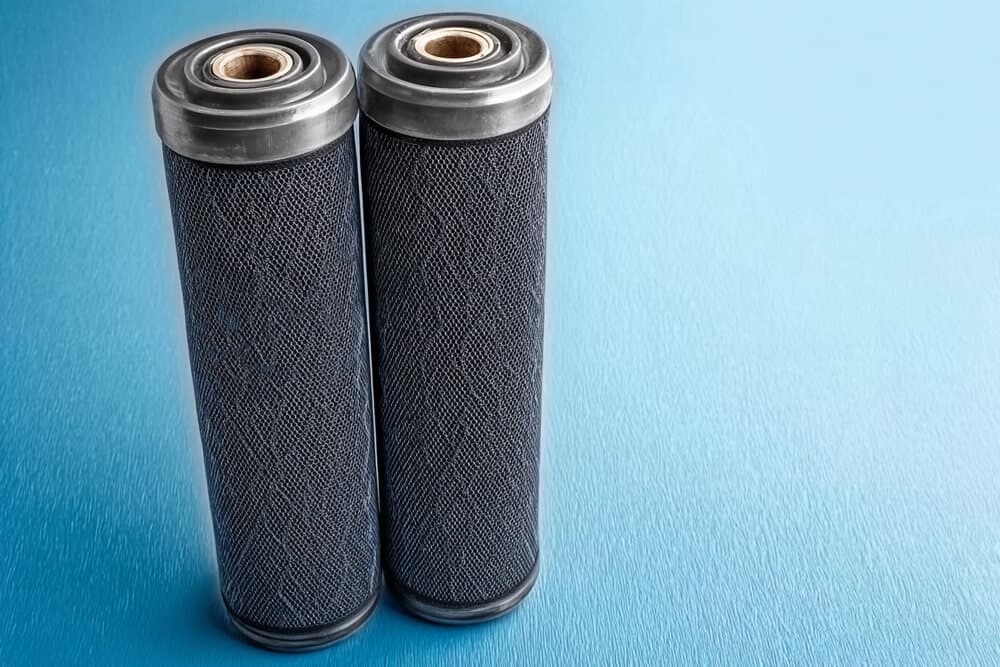
Commercial carbon filters come in different physical forms, each designed to balance flow rate, surface area, and capacity. The three main types used in water treatment are granular activated carbon (GAC), carbon block, and radial flow carbon.
Granular Activated Carbon (GAC)
This type contains loose carbon granules. The benefit of GAC filters is their low resistance to water flow, which allows for higher flow rates. However, the loose structure means there is less surface contact time between the water and the carbon, which can reduce the filter’s overall effectiveness compared to denser formats.
GAC filters are often used in:
- Point-of-entry systems
- Pre-treatment stages for higher flow applications
- Systems where high capacity is not the primary requirement
Carbon Block
In carbon block filters, the carbon is ground to a fine powder and compressed into a solid form. This increases the surface area and improves adsorption performance. Because of their density, these filters allow for more thorough contaminant removal, but the water flow is more restricted.
You would typically see carbon block filters in:
- Point-of-use systems (e.g. under-sink filters)
- Reverse osmosis pre-filtration stages
- Applications requiring higher contaminant reduction
Radial flow carbon
Radial flow filters combine features of both GAC and carbon block. They are often used in larger cartridges and feature a granular carbon core with a design that promotes water flow around and through the media. This structure helps maintain a reasonable flow rate while increasing contact time.
These are usually found in:
- High-flow commercial systems
- Systems requiring a balance between flow rate and contaminant removal
Each type has its own strengths and limitations. Your selection should depend on the system configuration, flow requirements, and the contaminants you aim to remove.
What contaminants do carbon filters remove
Activated carbon is primarily used to remove organic compounds and chemicals that affect the taste, smell, and safety of water. However, it does not remove all types of contaminants. Its effectiveness depends on the nature of the substances, the contact time, and the type of carbon used.
Substances carbon filters commonly remove:
- Chlorine – this is the most common application. Carbon is highly effective at removing free chlorine used in municipal water disinfection.
- Chloramines – these are more stable compounds formed by combining chlorine and ammonia. Standard carbon is not as effective against them, but catalytic carbon — which has enhanced surface properties — is used to improve chloramine removal.
- Volatile Organic Compounds (VOCs) – these include a wide range of industrial chemicals and by-products, some of which are regulated in drinking water.
- Pesticides and herbicides – many of these are organic in nature and can be adsorbed by activated carbon.
- Taste and odour compounds – carbon removes substances that cause unpleasant taste or smell, even if they are not harmful at low levels.
Contaminants carbon filters do not remove:
- Inorganic minerals – dissolved solids such as calcium, magnesium, and sodium are not captured by carbon and pass through unchanged.
- Heavy metals like lead and arsenic – standard carbon does not remove these effectively. However, some filters blend carbon with other media (e.g. ion exchange resins or specialised additives) to reduce lead. Arsenic is typically handled using entirely different technologies.
- Microorganisms – carbon does not disinfect water or remove bacteria, viruses, or parasites.
I know I mentioned in the beginning, but it’s important to understand that a carbon filter is not a complete solution. In industrial water filtering systems, it is often combined with other stages — such as reverse osmosis, ultrafiltration, or UV — depending on the water quality requirements.
Where are carbon filters used in commercial water treatment
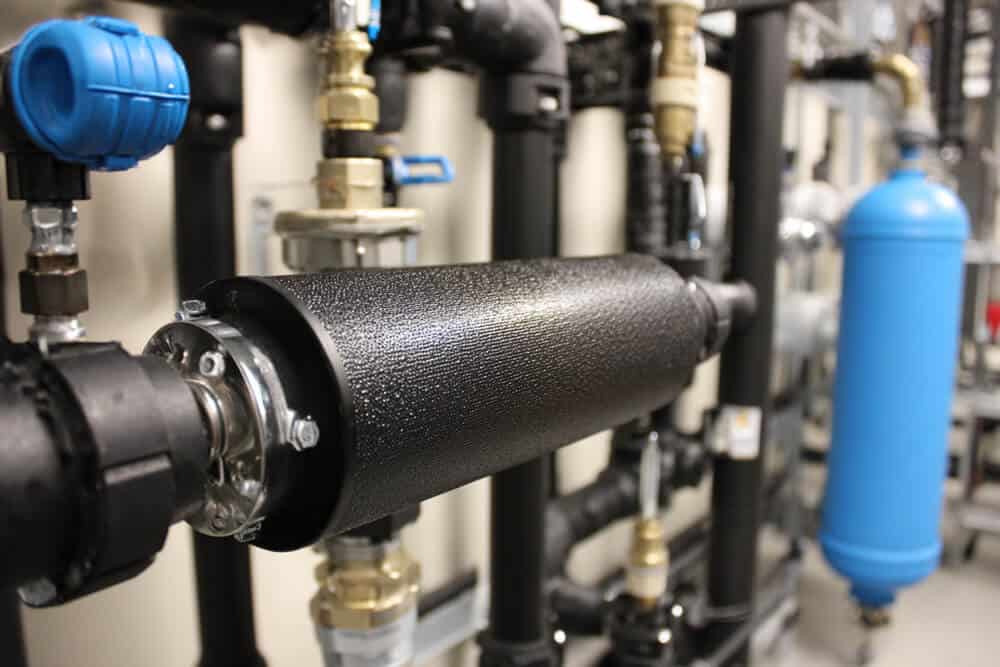
Carbon filters are widely integrated into commercial water treatment systems. They are valued for their ability to remove chlorine, improve taste and odour, and protect sensitive components downstream. In most cases, carbon is not used in isolation but as part of a multi-stage setup.
Here are some of the most common commercial applications:
Pre-treatment for reverse ssmosis (RO) systems
Activated carbon is typically used before the membrane in RO systems to remove chlorine. RO membranes are sensitive to oxidising agents like chlorine, which can damage the membrane structure and reduce its lifespan. Using carbon filters upstream prevents this.
Ultrafiltration (UF) Systems
In UF systems, carbon filters serve two roles:
- Removing chlorine to protect the membrane
- Reducing lead and other targeted contaminants (if the carbon is blended with additional media)
Point-of-use and point-of-entry systems
Carbon filters are often installed in under-sink units or plumbed into the main water supply line in commercial buildings. In these setups, they improve water taste and remove residual disinfectants at the point where water is dispensed or enters the building.
Industry-specific applications
- Food and beverage production. Carbon filters help improve taste consistency and remove unwanted odours or chemical residues.
- Healthcare facilities. Used to pre-treat water feeding into sterilisation equipment or lab-grade systems.
- Hospitality sector. Hotels and restaurants use carbon filters for both guest-facing water dispensers and kitchen operations.
In each of these scenarios, carbon filters serve a specific role, and their performance is influenced by water flow rate, pressure, and the presence of other contaminants. Choosing the right type and size of filter depends on both the quality of incoming water and the requirements of the system.
How often should you replace a carbon filter
The lifespan of a carbon filter depends on its capacity and how much water passes through it. Over time, the internal surface area becomes saturated with contaminants. Once all available adsorption sites are occupied, the filter can no longer remove substances from the water effectively.
If a saturated filter is left in place, there are two risks:
- Contaminants will start to pass through untreated.
- Previously adsorbed substances may detach and re-enter the water stream.
To avoid this, you should follow the replacement schedule recommended by the manufacturer. In most commercial settings, carbon filters are replaced at least once per year, though in higher-use systems, this may need to happen more frequently.
Several factors influence how often replacement is needed:
- Water quality. Higher levels of chlorine or organic contaminants reduce lifespan.
- Water volume. The more water processed, the faster the carbon is exhausted.
- Filter size and type. Larger filters with greater surface area last longer.
- Application. Critical systems (e.g. RO pre-treatment) may require stricter maintenance schedules to avoid damage.
In systems without flow meters or capacity indicators, replacement is often based on time or visual inspection where possible. Some operators schedule proactive maintenance intervals to avoid performance drops.
It’s essential not to wait until problems appear. Replacing carbon filters on time helps ensure consistent performance and protects other system components.
To find out more about how we could help you recycle your water, including the designing, manufacturing, installing & commissioning, servicing, and refurbishment of water purification systems, request a Free consultation to find the commercial water treatment solution you’ve looking for.