


How to Make Purified Water: Water Purification Methods & Their Uses

Pure water is attractive and delicious, and contemporary water purification methods are more powerful and versatile than ever before, achieving both purity and taste without demanding much technical knowledge from their users. The days when you needed a system for every filtration method are over. Commercial water filters often combine two or more techniques in a single tank, so your purification is much more than a process. It’s a strategy.
Multi-media water filters are significantly more efficient than single-media tanks. By relying on density and stratification, a single tank can achieve soft, safe drinking water, and many of today’s manufacturers will engineer a set of cartridge elements to suit your needs precisely.
There are a number of ways to purify water, each with its own advantages and disadvantages. Some methods are more suitable for certain applications than others. The most common methods of water purification are distillation, reverse osmosis, and deionisation.
Table of contents:
- Overview of reverse osmosis
- Overview of distillation
- Overview of deionisation
- Overview of UV water filters
- Overview of carbon water filters
Water purification method №1 — Reverse Osmosis
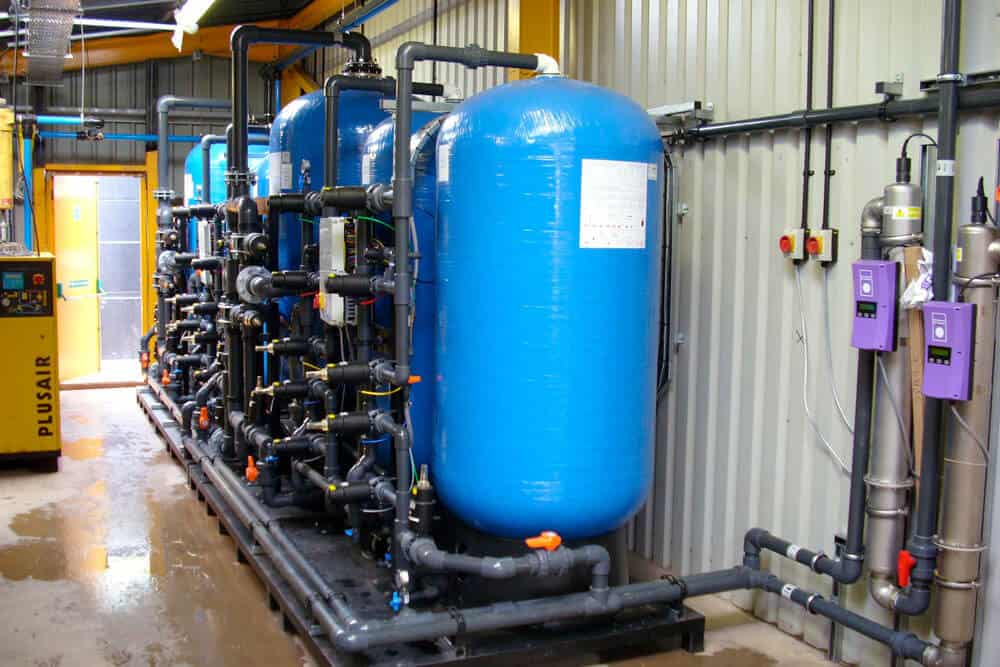
Reverse osmosis uses a pump to create pressure that forces water through a semi-porous membrane, leaving most dissolved salts and minerals behind. A five-stage system combines reverse osmosis with carbon filters, removing microbial content, chlorine, and salts that cause water hardness. To find the right reverse osmosis performance for your plant, you’ll need a filter that achieves a high salt rejection and recovery rate. The latter tells you how much water you recover from the filtration process. A low recovery rate can weigh heavily on your utility bills, so look for 75% to 85%. Today’s reverse osmosis filters achieve their job using improved membrane technology. They can even achieve nanofiltration. The smaller the pore size, the more thoroughly it can remove contaminants.
Reverse Osmosis advantages and disadvantages
| Advantages | Disadvantages |
|---|---|
| Removes particles, bacteria, and viruses from water, making it safer to drink. | Requires a lot more energy than other forms of water purification |
| Relatively small and easy to operate. | Components that make up the RO system are typically expensive and need regular maintenance |
| Used to produce high-quality drinking water from alternative sources such as wastewater or stormwater runoff. | High volumes of wastewater they produce |
| Come in a variety of sizes and can be used with public or private drinking water sources | |
| Versatile and can meet the needs of many different types of businesses, making it a popular choice for commercial applications as well |
Conclusion
Despite its disadvantages, reverse osmosis water purification is considered the best way to remove contaminants from water. It is very effective at removing particles as small as 0.001 microns and is the preferred method of water purification for homes that use well water. A reverse osmosis system also removes dissolved minerals from the water which can be good or bad, depending on your needs.
Water purification method №2 — Distillation
Distillation uses steam and condensation to purify water. It can remove pollutants, chemicals, and bacteria, so it’s often combined with reverse osmosis, particularly in hard water regions. Microscopic contaminants are removed with healthy minerals like fluoride, so the latter may need to be replaced after filtration. Commercial distillers can provide up to 5, 000 gallons of treated water a day, relying on electricity or gas to generate heat. Steam can be passed through water or fan-cooled tube or cone, but if pesticides and volatile organic compounds need to be dealt with, this method needs carbon support. Water systems can be containerised and customised to save you precious floor space.
Distillation advantages and disadvantages
| Advantages | Disadvantages |
|---|---|
| Produces very high-quality water | Slow process |
| Does not use any chemicals or filters, it is a completely natural process | Expensive, particularly if you are distilling a compound that is not readily available |
| Safer than other forms of water purification | The quality of the final product can vary depending on the equipment used and the skill of the operator |
| Can be used to purify a wide range of liquids, including alcohol, vinegar, and essential oils | |
| Effective way to remove salt from seawater, making it suitable for drinking or irrigation | |
| Effective way to purify water without using electricity or any other type of energy source |
Conclusion
Destillation is great water purifying method for developing countries, where access to clean water can be difficult and costly. Despite its disadvantages, distillation remains one of the most widely used techniques for purifying water.
Water purification method №3 — Deionisation
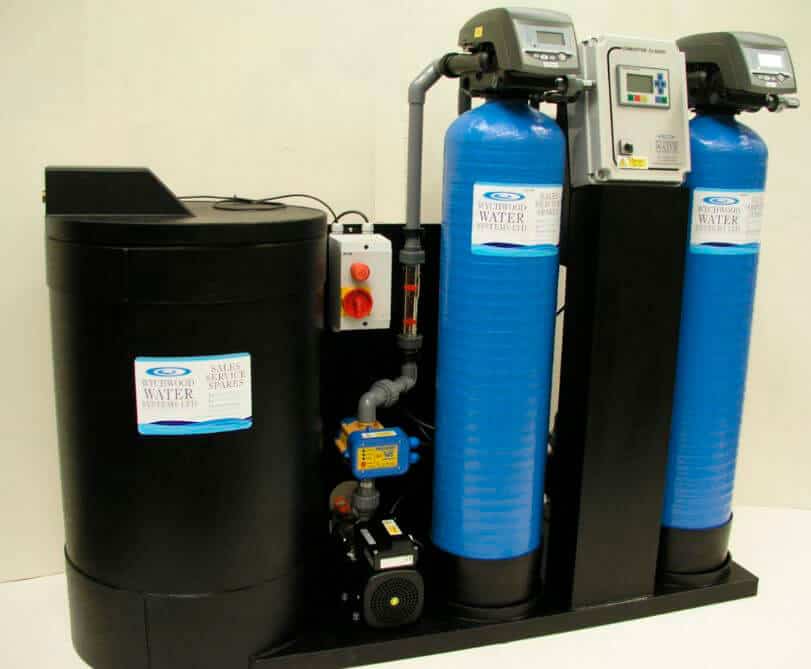
Deionisation or Ion exchange remains one of the best purification methods for clearing barium, radium, nitrates, and arsenic from water. It leaves water clear and doesn’t produce the flat taste that’s characteristic of stale distilled water. Chelating and anion resins support the ion-exchange process by attracting positively charged ions. This makes ion exchange ideal for purifying natural spring water, which is often high in heavy metals and arsenic.
Deionisation advantages and disadvantages
| Advantages | Disadvantages |
|---|---|
| Produces pure water that is safe to drink | More costly |
| Removes any unwanted tastes or smells from the water | Shorter shelf life if stored for a long period of time |
| Safer than other forms of water purification | The quality of the final product can vary depending on the equipment used and the skill of the operator |
| Does not cause scaling or corrosion | |
| Cost-effective and easy to operate | |
| Can be used to treat large volumes of water and can be incorporated into a variety of water treatment facilities | |
| Can be used in combination with other purification methods |
Conclusion
Deionisation is a good choice for industrial applications. The possibility to use in combination reverse osmosis or distillation can remove the smallest trace elements of minerals and salts. This will help to ensure that the final product is free of all contaminants.
Water purification method №4 —UV Water Filters
UV (Ultraviolet) water filters use ultraviolet light to disinfect water by destroying the DNA of microorganisms, rendering them unable to reproduce and cause illness. The water passes through a chamber containing a UV lamp, typically emitting light at a wavelength of 254 nanometers, which is highly effective at neutralizing bacteria, viruses, and protozoa. Unlike chemical disinfection methods, UV treatment doesn’t alter the taste, odor, or pH of water, making it an attractive option for businesses and homes seeking pure-tasting water. Modern UV systems are compact and can be easily integrated into existing water treatment setups, often used in combination with sediment filters to ensure particles don’t shield microorganisms from the UV light.
UV Water Filters advantages and disadvantages
| Advantages | Disadvantages |
|---|---|
| Chemical-free disinfection that doesn’t alter water taste or add byproducts | Does not remove dissolved solids, heavy metals, or chemical contaminants |
| Highly effective against bacteria, viruses, and protozoa, including chlorine-resistant organisms | Requires clear water; particles can shield microorganisms from UV light |
| Low maintenance with lamp replacement typically needed once per year | UV lamp loses effectiveness over time and requires electricity to operate |
| Fast treatment process with no contact time required | Provides no residual disinfection once water leaves the UV chamber |
| Environmentally friendly with no chemical discharge | Initial equipment costs can be significant |
| Compact design suitable for point-of-use or whole-system applications |
Conclusion
UV water filtration is an excellent choice for microbiological disinfection, particularly when combined with other purification methods. It’s ideal for well water systems and areas where biological contamination is a concern. However, UV treatment should be paired with filtration methods like reverse osmosis or carbon filters to address chemical contaminants and ensure comprehensive water purification.
Water purification method №5 — Carbon-Based Water Filters
Carbon-based water filters rely on activated carbon’s extraordinary adsorptive properties to remove contaminants from water. Through a process called adsorption, organic compounds, chlorine, volatile organic compounds (VOCs), and many chemical pollutants bind to the porous surface of carbon particles as water flows through. Activated carbon can be produced from coconut shells, coal, or wood, and is “activated” through high-temperature processing that creates millions of tiny pores, dramatically increasing surface area. These filters come in various forms—granular activated carbon (GAC), carbon block, or catalytic carbon — each offering different flow rates and filtration capabilities. Carbon filters are commonly used as pre-filters in multi-stage systems or as standalone solutions for improving taste and removing chlorine from municipal water supplies.
Carbon-Based Water Filters advantages and disadvantages
| Advantages | Disadvantages |
|---|---|
| Excellent at removing chlorine, bad tastes, and odors from water | Does not remove dissolved minerals, salts, or inorganic compounds |
| Effective against many organic chemicals, pesticides, and herbicides | Limited effectiveness against bacteria, viruses, and heavy metals like lead |
| Improves water taste and smell significantly | Carbon media needs regular replacement to maintain effectiveness |
| Cost-effective and widely available for residential and commercial use | Can become breeding grounds for bacteria if not properly maintained |
| No electricity required for operation | Slower flow rates with carbon block filters compared to other methods |
| Removes many volatile organic compounds (VOCs) and pharmaceutical residues | Does not soften hard water or remove total dissolved solids |
| Can be easily integrated into multi-stage purification systems | Performance degrades over time as adsorption capacity is exhausted |
Conclusion
Carbon-based water filters are an essential component of most comprehensive water purification strategies. They excel at improving taste and removing chemical contaminants, making them particularly valuable for treating chlorinated municipal water. While they don’t address all purification needs, carbon filters are cost-effective and work exceptionally well when combined with reverse osmosis, UV, or other methods to create a complete water treatment solution for both residential and commercial applications.
So what’s the best water purification method?
The best water purification method doesn’t exist, as it all depends on needs and budget. If you are confused which water purification method to choose, then we encourage you to view our services to find the ideal water purification solution for you.
If you have any other questions or would like to learn more from our experts about which methods would be most effective for your business, we welcome you to contact us today.

